Mistaken Identity in Farce: How One Mix-Up Drives the Plot
Mistaken identity in farce turns a simple mix-up into legible theatrical action, showing how props, entrances and social rules shape the audience’s view.
A visitor arrives at the wrong house, is greeted by a name that is not theirs, and accepts a chair before anyone can explain the error. Mistaken identity in farce starts with a confusion the audience can see and a character cannot yet correct.
What makes mistaken identity work in farce?
The error needs to be simple enough to follow and useful enough to change what people do. A swapped coat, an assumed name or an absent guest can set things moving. The pleasure is in how the mistaken belief changes the scene: who is welcomed, who is questioned and who is left waiting outside.
Each character needs a distinct reason to accept the wrong account. One may be too embarrassed to ask for a name; another may assume a colleague has already made the introduction. Their different assumptions let the audience follow the mismatch without requiring anyone to behave like an idiot.
How can the audience follow the mix-up?
Give the audience a clear view of the mismatch, whether by revealing the visitor’s real identity early or by showing a prop that points to the error. Then keep the characters’ information distinct. The audience may know who has the letter, for example, while one character believes it belongs to someone else.
A costume, title or place in a household can signal who a person is supposed to be. When those signs are misread, the scene can expose the rules behind them: who gets deferential treatment, whose word is accepted and who is expected to explain themselves.
How do entrances, exits and props shape mistaken identity in farce?
Movement makes the confusion visible. An entrance can bring in the one person who recognises the visitor; an exit can remove the only character who knows why the name is wrong. Doors separate conversations and let them collide at awkward moments.
Props can carry an assumption between scenes. A hat, letter, suitcase or calling card gives someone a reason to infer an identity, but its purpose should be easy to understand. If the audience cannot tell why a character thinks the wrong person holds the letter, the scene feels like paperwork rather than comedy.
Blocking has the same job. Make clear who has heard what, who is concealed and who is about to meet. A pause can let the audience anticipate a collision; hurried movement alone cannot explain it.
How can the confusion grow without becoming hard to follow?
Build each new complication from a visible cause. One character acts on a wrong assumption, another draws a different conclusion, and a new arrival changes what can be said in public. Vary the pressure: a social awkwardness may lead to a professional embarrassment, then to a meeting where the false identity has to be maintained in front of others.
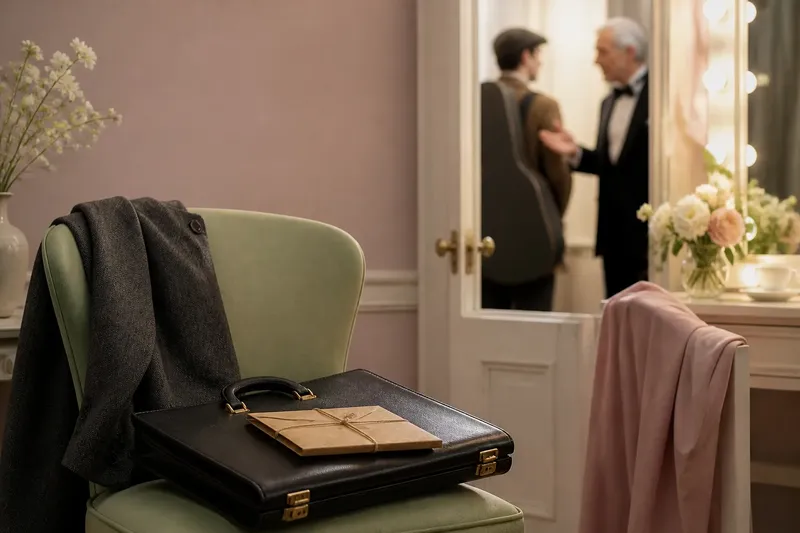
Imagine a small theatre committee expecting a pianist. A volunteer mistakes a courier with a music case for the performer and ushers him into the green room. When the chair asks the courier about the programme, the volunteer says it is being revised. The next arrival, an eager donor, expects to discuss the music; the result is a clear new problem, because the courier must now respond to a conversation he was never meant to have.
It is not worth the effort to add a fresh misunderstanding to every entrance. Repeating the same denial makes the plot feel padded. A new complication should change what a character can do, what the audience expects, or who is at risk of discovering the truth.
What questions do writers ask about mistaken identity?
How early should the audience learn the truth?
Early enough to understand the central mismatch, unless the reveal itself is the point of the scene. In many farces, anticipation comes from watching the characters act on different information.
How many misunderstandings can one plot support?
There is no useful fixed number. Each one should follow from an earlier action and alter what can happen next; if removing it changes nothing, it is probably unnecessary.
Does farce need a happy ending?
It needs an ending that addresses the pressure created by the mix-up, not necessarily a reward for everyone. Recognition, exposure or a clear change of course can release the scene’s tension.
Can mistaken identity work without disguises?
Yes. A name, message, role or rushed introduction can be enough if the error makes sense in the scene. Disguise is one tool, not a requirement.
What can a mistaken identity plot reveal about its setting?
The rules characters fear breaking give the mix-up its social meaning. A false guest may expose expectations about hospitality and rank; a mistaken professional title may show how authority depends on signals such as dress, paperwork or introductions. The audience can see those rules in the effort characters make to avoid challenging them.
For a final practical check, look at the central assumption and ask what it lets each character do that they could not do if the truth were clear. That answer keeps mistaken identity in farce tied to the scene’s social rules, rather than leaving it as a name-swapping trick.